

Beyond the Driver’s Seat: Why Drug & Alcohol Testing should be Company-Wide
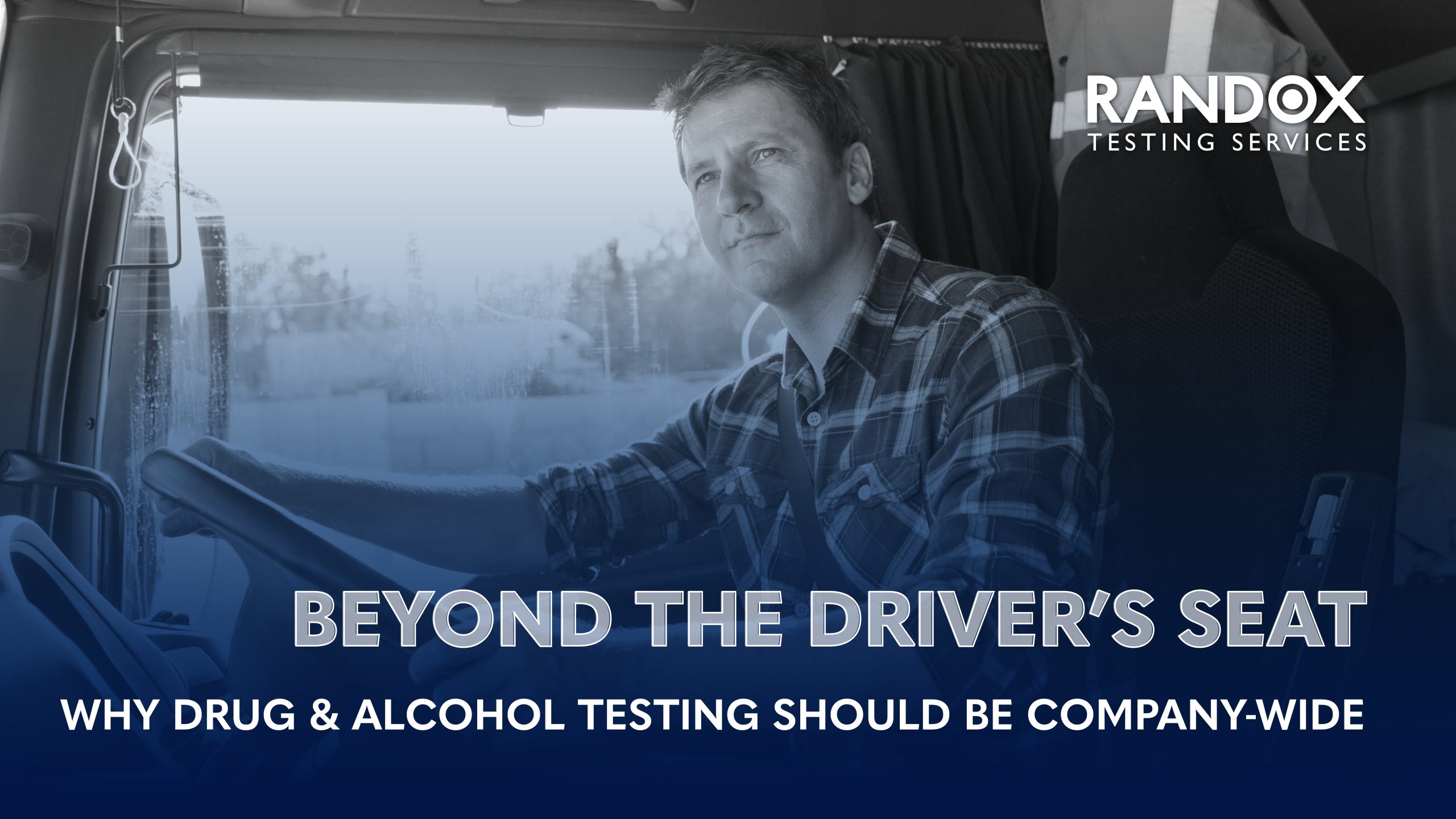
In industries like transport, logistics, manufacturing, and construction, drug and alcohol testing is often associated with safety-critical roles such as drivers, machine operators, and engineers. But focusing solely on these positions overlooks an important truth: every role carries responsibility, and impairment at any level can have serious consequences.
The Hidden Risks of Non-Safety-Critical Roles
While the dangers of driving under the influence are well known, reduced judgment, slower reactions, or poor decision‑making in other roles can be just as damaging. These positions may not involve heavy machinery, but they still carry significant operational, financial, and reputational responsibility.
- – Schedulers and dispatchers: A momentary lapse in concentration when planning routes or timings can lead to missed deliveries, operational disruption, customer dissatisfaction, or even contribute to on‑road incidents.
- – HR and compliance officers: These roles depend on clear thinking, consistency, and strict adherence to policy. When judgment is clouded, it can weaken the entire safety framework, compromise investigations, or allow risks to go unnoticed which is affecting the wellbeing of the whole workforce.
- – Customer service teams: Reduced focus or altered behaviour can influence tone, responsiveness, and professionalism, ultimately damaging client relationships and the organisation’s reputation.
- – Managers and supervisors: Leadership roles require sound decision‑making, fair handling of staff issues, and the ability to respond quickly to emerging risks. If a manager’s clarity is affected, it can lead to poor direction, mishandled incidents, or inconsistent enforcement of safety standards, all of which undermine team performance and trust.
- – Finance Teams: Accuracy and attention to detail are essential in financial roles. Errors in payroll, budgeting, invoicing, or compliance reporting can have serious consequences, from cash‑flow disruption to regulatory breaches. Even small mistakes can escalate into costly problems for the business.
Legal and Ethical Accountability
Employers have a duty of care under the Health and Safety at Work Act 1974 to ensure all staff are fit to perform their roles [1]. That duty doesn’t stop at the warehouse door or the driver’s cab. It applies to every employee, from the front desk to the boardroom.
By extending drug and alcohol testing beyond safety-critical roles, companies demonstrate a culture of fairness, accountability, and proactive risk management. It’s not about catching people out, it’s about protecting everyone.
Building a Culture of Shared Responsibility
When testing is applied consistently across all roles, it sends a powerful message: safety is everyone’s responsibility. It removes stigma and suspicion, replacing them with transparency and trust.
Employees are more likely to support testing when they see it applied fairly. It becomes a shared standard, not a targeted measure. And when paired with access to support and rehabilitation, it becomes a tool for care not punishment.
The Commercial Case for Comprehensive Testing
Beyond ethics and safety, there’s a strong business case:
- – Reduced downtime from incidents or investigations
- – Enhanced reputation with clients and regulators
- – Improved insurance terms through demonstrable risk mitigation
- – Greater workforce reliability and morale
In today’s competitive landscape, companies that invest in robust testing policies stand out as responsible, forward-thinking employers.
Final Thought: Safety Starts with a Clear Mind
Every role matters, every decision counts and every employee deserves to work in an environment where safety is taken seriously.
By embracing comprehensive drug and alcohol testing, businesses can protect their people, their reputation, and their future, one clear mind at a time.
How we can help
At Randox Testing Services, we understand that workplace safety is a team effort. That’s why we offer tailored drug and alcohol testing programmes that cover all roles.
If you’d like to learn more about workplace drug and alcohol testing, or review how your current testing programme is structured, our team is here to help.
Get in touch with our team to discuss your requirements or ask any questions about workplace testing.
Email: testingservices@randox.com
Phone: +44 (0) 28 9445 1011
LinkedIn: Randox Testing Services
Learn more about our services at: Randox Drug & Alcohol Testing Services
References
- UK. “Health and Safety at Work Etc. Act 1974.” Legislation.gov.uk, 1974, www.legislation.gov.uk/ukpga/1974/37/contents.